
Document Automation
Product features
By practice area
By company size
Contract Review
PRODUCT FEATURES
Resources
LearN
Case Studies
Pricing
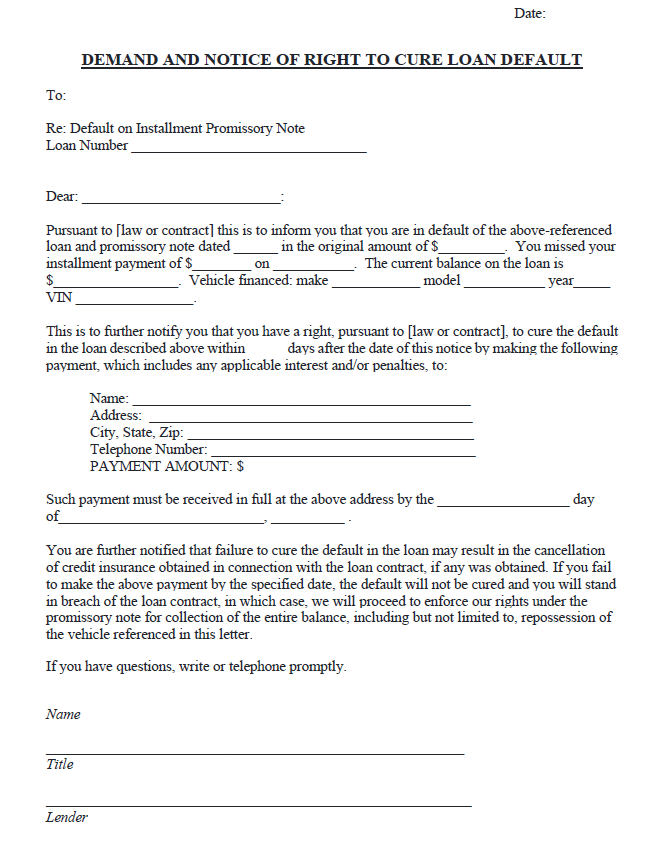
This document is a letter from a lender to a borrower stating that the borrower is in default of their car loan agreement and outlines the specific terms or conditions of the loan agreement that have been violated, the steps that the lender intends to take in response, and any options the borrower may have to avoid repossession.
Free To Use

Lawyer Backed

This document is a notice of default letter specific to a loan for business purposes and serves as a formal notice to the borrower that they have failed to make payments on the loan and that the lender may take legal action to recover the debt if the borrower does not cure the default.
Free To Use
$399
Lawyer Backed


Default Letter For a Car Loan
This document is a letter from a lender to a borrower stating that the borrower is in default of their car loan agreement and outlines the specific terms or conditions of the loan agreement that have been violated, the steps that the lender intends to take in response, and any options the borrower may have to avoid repossession.
A loan default letter, also called a notice of default, is a written notification from a lender to a borrower stating that the borrower is in default of the loan agreement. This letter informs the borrower of the specific terms or conditions of the loan agreement that have been violated, most often missed payments, and outlines the steps that the lender intends to take in response. Lenders send default letters on auto loans, mortgages, personal loans, student loans and commercial loans, and the content and timing rules differ by loan type and state.
The notice of default typically includes the amount of the delinquent payments, the date on which the default occurred, any late fees or penalties that have been assessed, and the total amount needed to bring the loan current. The letter also provides a deadline for the borrower to cure the default by making the necessary payments or taking other actions, and states what the lender will do if the default is not cured: accelerating the loan balance, repossessing the vehicle, starting foreclosure or filing suit.
Most state laws let a lender repossess a vehicle once the borrower is in default under the contract, but several states require a written notice and a right to cure before repossession, and a growing number require a post-repossession notice that gives the borrower a window to reinstate the loan. California's Rees-Levering Act (Civil Code section 2983.2), for example, requires the lender to send a Notice of Intent to Dispose of Motor Vehicle within 60 days after repossession, giving the borrower at least 15 days to reinstate or redeem. Under Uniform Commercial Code section 9-611, adopted in every state, a secured lender must send the borrower a reasonable notification before it sells a repossessed vehicle, and section 9-614 sets out the required contents of that notice in consumer transactions, including a statement of the borrower's liability for any deficiency.
Federal mortgage servicing rules under Regulation X govern the early stages of a home loan default. The servicer must make live contact with a delinquent borrower by the 36th day of delinquency and send a written notice with loss mitigation options by the 45th day (12 CFR 1024.39), and it may not make the first notice or filing required for foreclosure until the borrower is more than 120 days delinquent (12 CFR 1024.41(f)). State law then controls the formal notice: in California, the lender records a Notice of Default and waits at least three months before recording a Notice of Trustee's Sale (Civil Code section 2924), and in judicial foreclosure states the default notice is followed by a court complaint.
Borrowers should read the notice carefully, compare the amount claimed with their own records, and respond before the cure deadline. Paying the reinstatement amount, agreeing to a repayment plan or signing a forbearance agreement each stops the lender's next step. Ignoring the letter leads to acceleration of the full balance, repossession or foreclosure, collection costs added to the debt, and a default reported to the credit bureaus.
Want us to automatically fill out this template for you? Use this legal app to get guidance and final document you can use in a few minutes. No downloads required.
Gavel Exec is an AI associate that reviews, redlines, and drafts commercial contracts directly in Word. Apply your playbooks in one click


