When you need form 700-00003
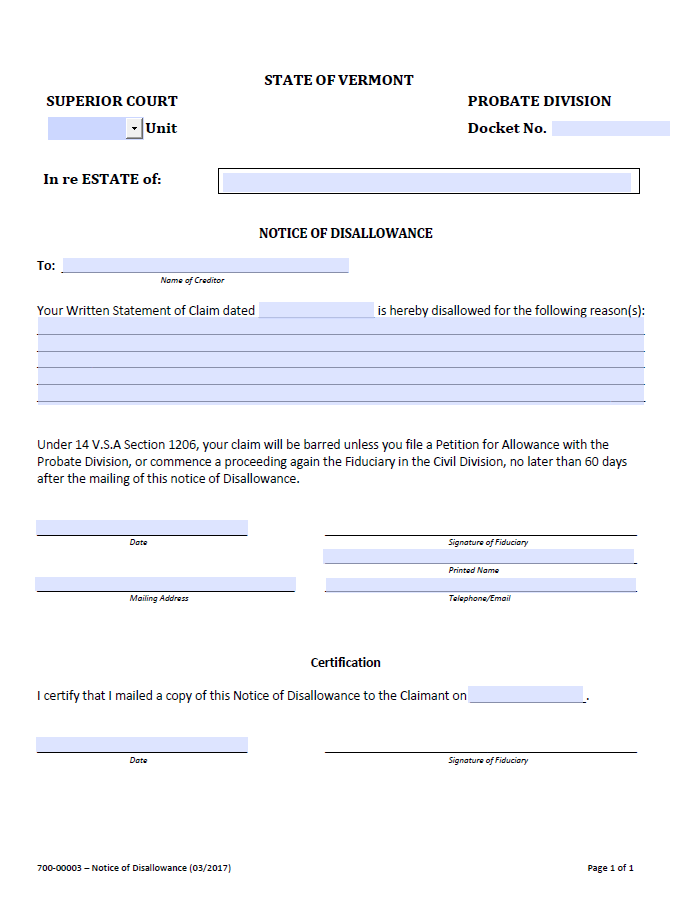
In the probate process, the 700-00003 Notice of Disallowance form is used when an estate's fiduciary formally rejects a creditor's claim against the estate. This occurs after the creditor has submitted a Written Statement of Claim, which typically happens following the initial probate proceedings and the filing of claims against the decedent's estate. It is crucial for the fiduciary to provide a clear and concise reason for the rejection of the claim.
Key situations that may trigger the need for this notice include:
- The claim is invalid or not supported by proper documentation.
- The debt was not incurred by the deceased individual.
- The claim amount exceeds what is justifiably owed.
- The creditor filed their claim after the allowed time period.
Prior to issuing the Notice of Disallowance, the fiduciary should have created the estate's Inventory of Assets and possibly filed the Notice to Creditors form, making them aware of the timeline and process for submitting claims. Once the disallowance is sent, the creditor has the option to file a Petition for Allowance or initiate legal proceedings within the designated timeframe to contest the decision.
How to file form 700-00003
1. Identify the Fiduciary: Before filing, determine the fiduciary responsible for handling the estate where the claim was rejected.
2. Prepare Documentation: Have the written statement of the creditor claim and the notice of disallowance. Complete the form with with reasons for rejection.
3. File With Probate Division: Submit the completed Notice of Disallowance to the applicable Probate Division of the Vermont Superior Court.
4. Serve the Creditor: Send a certified copy of the notice to the claimant, confirming the date of mailing.
5. Take Further Action if Necessary: To contest the disallowance, file a Petition for Allowance with the probate division or initiate proceedings against the fiduciary in the civil division within 60 days of receiving the notice.