Document Automation
Product features
By practice area
By company size
Contract Review
PRODUCT FEATURES
Resources
LearN
Case Studies
Pricing
How to review IT managed services agreements with AI: how the MSA, SOW, and SLA fit together, uptime and service credits, exit terms, DORA requirements, and ten questions to ask about any SOW.
Easy intake and document automation to auto-populate your templates.
Managed services contracts rarely arrive as one document. There is a master agreement signed two years ago, a new statement of work the IT team needs signed this week, and a service level attachment nobody has opened since the original deal. The risk tends to live in the newest document, because the provider drafted it after learning what you accepted the first time.
Reviewing these deals well means asking a few unglamorous questions: which document wins in a conflict, how downtime is measured, and what happens on the day you want to leave.
The short answer: The best AI tool for reviewing IT managed services agreements applies your positions on service levels, security, and exit to each document, lets you ask questions across the master services agreement (MSA), statement of work (SOW), and service level agreement (SLA), and returns redlines in Word. In Gavel Exec, you open the document you are negotiating, attach the others to the chat, run a managed services playbook, and get tracked-change redlines with the reasoning for each change.
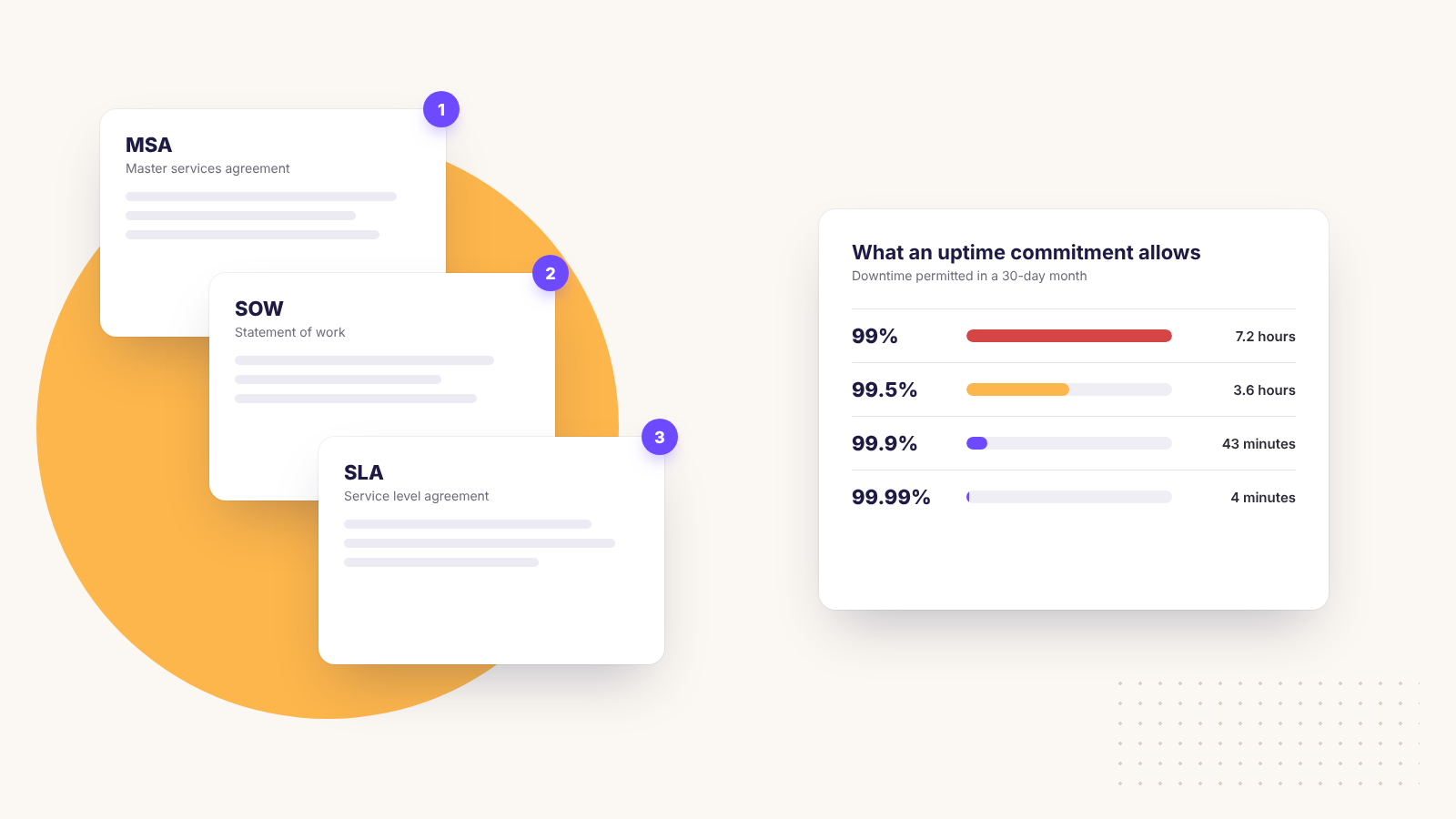
The MSA sets the legal terms. Each SOW describes a scope of work, price, and timeline. The SLA defines measurable targets and what happens when they are missed. The most important sentence in the whole stack is the order of precedence clause. Many MSAs let a SOW override the MSA if the SOW says so expressly, which means a provider can change the liability cap or termination rights for one scope of work through a document the business thinks of as operational.
| Clause | What to check | Common red flag |
|---|---|---|
| Order of precedence | Which document controls in a conflict | Any SOW can override the MSA by saying so |
| Scope of services | A complete description, including necessary services not listed | Anything unlisted billed as a change |
| Service levels | Targets, measurement period, and reporting | Availability measured quarterly or annually |
| Service credits | Amounts, caps, and whether credits are the only remedy | Credits as the sole remedy, with no termination right for chronic failure |
| SLA exclusions | Maintenance windows and third-party failures | Unlimited maintenance or any third-party outage excluded |
| Security and data | Defined controls, breach notice, data location | "Industry standard" security with nothing defined |
| Subcontractors | Approval rights and flow-down | Unrestricted subcontracting, including offshore |
| Liability cap | Amount and carve-outs | A few months of fees, with data breach inside the cap |
| Transition and exit | Duration, price, cooperation, and data return | No obligation to help move to a new provider |
Over a 30-day month, 99% availability allows about 7.2 hours of downtime, 99.5% allows about 3.6 hours, 99.9% allows about 43 minutes, and 99.99% allows about 4 minutes. The measurement period matters as much as the percentage. A 99.9% target measured over a year allows almost 9 hours of downtime, all of which could land in one bad week.
Many SLAs make service credits the customer's sole and exclusive remedy for missing targets, which can block damages claims and termination for poor performance (Bird & Bird). Customers usually negotiate a termination right for chronic failure, such as missing the same target three months out of six, and confirm that credits do not limit remedies for security breaches. Exit terms belong in the same negotiation: a transition period the customer can extend, service at existing rates during the transition, cooperation with the new provider, and data returned in a usable format (Morgan Lewis).
The EU's Digital Operational Resilience Act (DORA) has applied since January 17, 2025 (EIOPA). Article 30 requires contracts between EU financial entities and their information and communication technology (ICT) providers to cover service descriptions and subcontracting conditions, data locations, data protection and return, service levels, incident assistance, cooperation with regulators, and termination rights. Services supporting critical or important functions also need precise performance targets, contingency plans, participation in threat-led penetration testing, full audit rights, and exit strategies with a mandatory transition period.
In the US, the banking agencies' Interagency Guidance on Third-Party Relationships (June 2023) lists contract factors banks should consider, including performance measures, audit and remediation rights, business continuity, liability, subcontracting, and termination. A playbook for a bank or insurer should include one rule for each.
Attach the MSA and SLA to the chat, open the SOW, and ask these in Gavel Exec. Save the ones you use on every deal to the prompt library.
Picture a deputy general counsel at a regional bank. The chief information officer sends over a renewal SOW for managed security monitoring with a Friday signature deadline.
He opens the SOW in Word, attaches the five-year-old MSA and the SLA to the chat, and runs the bank's managed services playbook, which includes rules mapped to the interagency guidance. Then he works through the ten questions above. Two answers stand out. The SOW says it prevails over the MSA "with respect to the services described herein," which would replace the MSA's liability cap for the most sensitive service the bank buys. The new SLA measures availability annually instead of monthly.
He applies the redlines and sends the CIO a summary before lunch. The CIO's reply is one line asking how he found the precedence clause so fast, and he answers with the link Exec gave him to the exact sentence.
Most companies with a long-standing provider have one MSA and a dozen SOWs signed under it over the years. What legal teams increasingly want is a single pass across the whole stack that answers questions like "which of our SOWs override the MSA's cap?" Asking those questions document by document, with the MSA attached, is the practical approach today, and recording the answers in a tracker builds the history a portfolio-wide view will need.
Related reading: AI contract review for data processing agreements.
For lawyers who negotiate in Microsoft Word, a Word-native tool such as Gavel Exec applies a managed services playbook, answers questions about the related MSA and SLA attached to the chat, and proposes tracked-change redlines. CLM platforms suit teams whose priority is managing executed agreements and renewals.
A strong SLA measures availability monthly, defines downtime clearly, limits maintenance exclusions, sets response and resolution times by severity, and gives the customer a termination right for repeated failures.
Only if the contract says so. Customers usually negotiate a termination right for chronic failures and confirm that credits do not limit remedies for other breaches.
The order of precedence clause decides. Many MSAs let a SOW override the MSA if the SOW says so expressly, so every SOW should be checked against the MSA.
Article 30 requires service descriptions, subcontracting conditions, data locations, data protection and return, service levels, incident assistance, regulator cooperation, and termination rights, with additional terms such as audit rights and exit strategies for critical or important functions.
This article provides general information and is not legal advice.
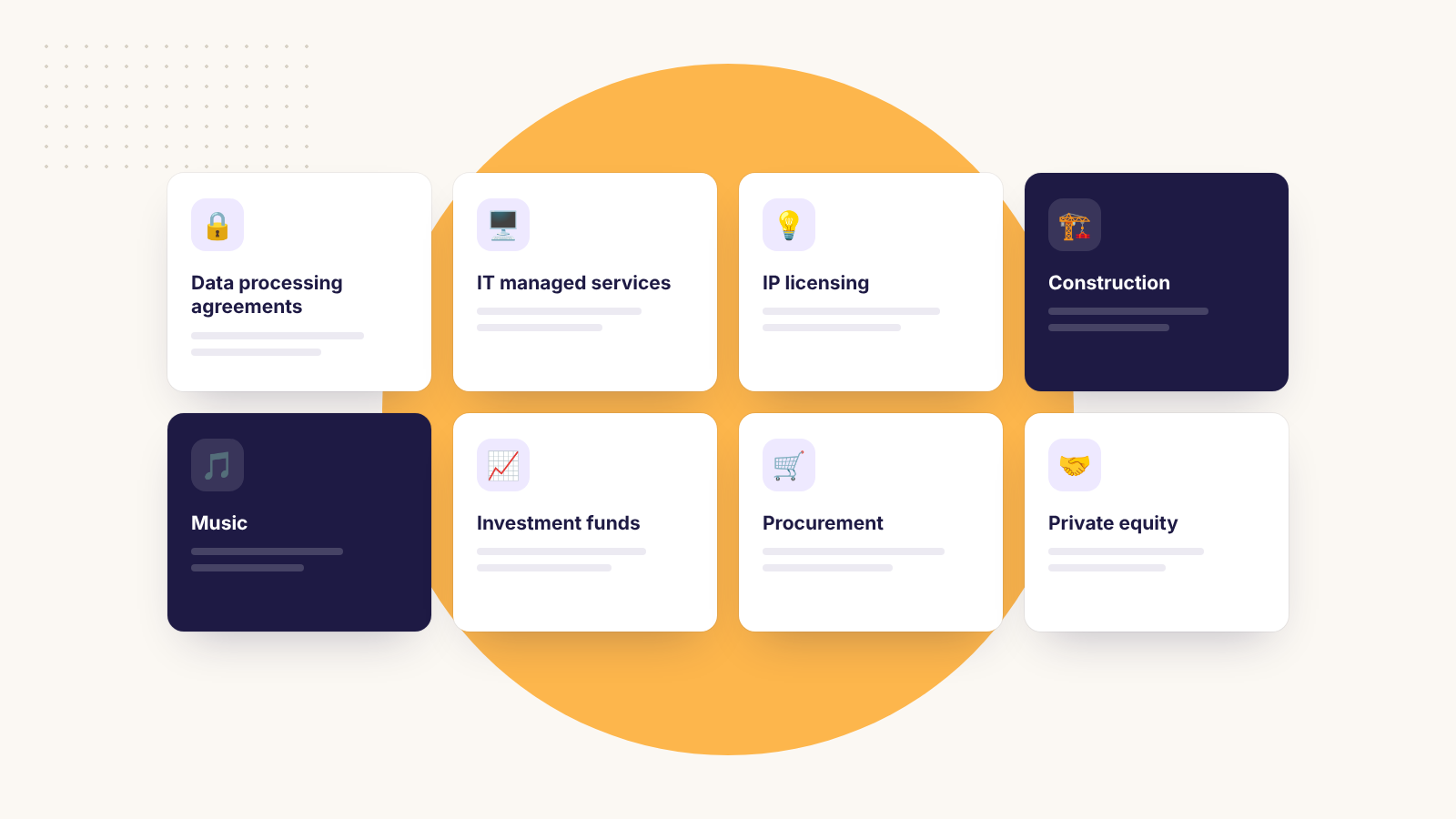
Guides to AI contract review by practice area, covering data privacy, IT managed services, IP licensing, construction, music, investment funds, procurement, and private equity.

How to review LPAs and side letters with AI: the LPA provisions LPs negotiate, how MFN elections work, an MFN tracker you can copy, and the 2026 regulatory context.

How to review music agreements with AI: a worked recoupment example, cross-collateralization, controlled composition at the 2026 mechanical rate, 360 deals, and the seven-year rule.


