Document Automation
Product features
By practice area
By company size
Contract Review
PRODUCT FEATURES
Resources
LearN
Case Studies
Pricing
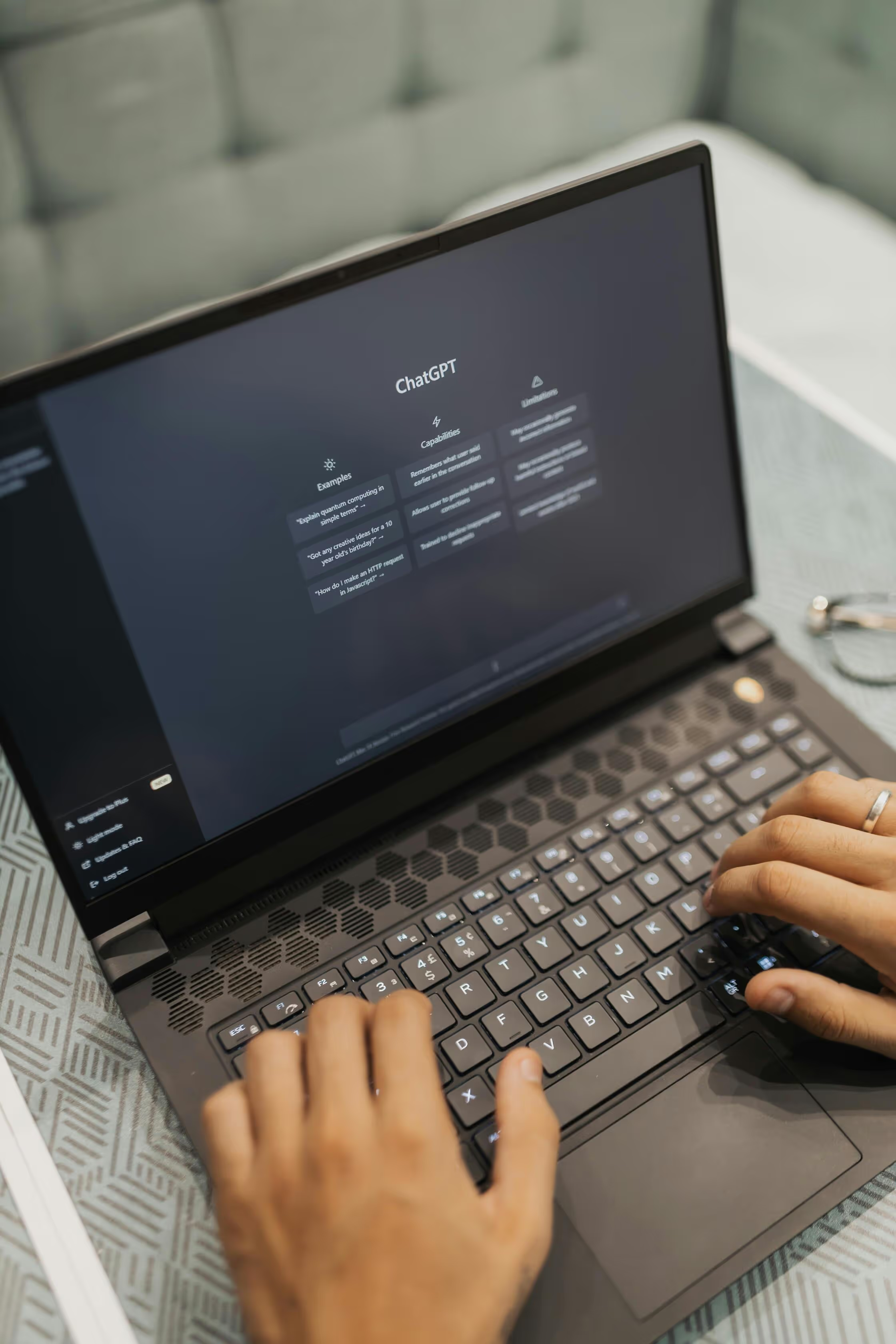
Is Claude or ChatGPT better for lawyers? A plain verdict, plus plan prices, data terms, Word add-ins, Vals AI scores and ABA Opinion 512.
Gavel Exec reviews, redlines and drafts contracts inside Microsoft Word, checked against your own playbooks. Start with 25 free queries, no credit card required.
For most lawyers, Claude is the better choice for contract redlining and legal reasoning: Claude for Word returns edits as tracked changes, and Claude models outscore OpenAI's on all five of Vals AI's active legal leaderboards. ChatGPT suits firms whose staff already use it and lawyers without a paid plan: ChatGPT for Word runs on every plan, Free included.
For lawyers, ChatGPT and Claude match at the business tier: ChatGPT Business and Claude Team's Standard seat each cost $20 per user per month billed annually, need two seats and don't train on your content by default. Claude for Word edits in tracked changes, ChatGPT for Word runs on every plan, and OpenAI's Astra for Law is in early access.
The real differences sit in the fine print: what each plan keeps, where zero data retention (ZDR) applies, what each Word add-in does and how each company's artificial intelligence (AI) models score on public legal tests.
Last checked November 17, 2026. Gavel publishes this guide and makes Gavel Exec and Gavel Workflows; Gavel Exec runs on models from AI providers, including OpenAI, under Zero Data Retention agreements. OpenAI's and Anthropic's plans and terms are described as their own websites state them. This comparison relies on the vendors' published plans, terms and help articles and on Vals AI's public leaderboards, and Gavel ran no writing test of its own.
Neither wins on every count. Claude's Word add-in is the one documented to produce tracked changes, and Claude models outscore OpenAI's on all five of Vals AI's active legal leaderboards, including LegalBench and Legal Research Bench. ChatGPT's add-in reaches every plan, and OpenAI offers a legal configuration, Astra for Law, to the firms it admits to early access.
| What lawyers compare | ChatGPT (OpenAI) | Claude (Anthropic) |
|---|---|---|
| Small-firm business plan | Business: $20 per user per month billed annually, $25 monthly; 2-seat minimum | Team Standard seat: $20 per seat per month billed annually, $25 monthly; 2 to 150 seats |
| Training on your content | Opt-out on Free, Go, Plus and Pro; off by default on Business and Enterprise | Opt-out on Free, Pro, Max and Ultra; none by default on Team and Enterprise |
| Zero data retention | API, for qualifying organizations OpenAI approves | Eligible APIs and Claude Code on qualified Enterprise accounts; Team and Enterprise interfaces ineligible |
| Word add-in | ChatGPT for Word on every plan; tracked changes not mentioned | Claude for Word on Pro and higher; tracked changes and comment replies |
| Legal offering | Astra for Law: early access for some United States law firms; no published price | Claude for Legal: 12 open-source practice-area plugins and 20+ connectors |
| Best for | Firms whose staff already work in ChatGPT, lawyers who want a Word add-in on any plan including Free, and large United States firms that want a legal search index through Astra for Law | Lawyers who redline in Word and want tracked changes, and teams that weigh public legal benchmark scores |
| Vals AI LegalBench, best model (October 13, 2026) | GPT-5.6 Sol, 86.97% | Claude Fable 5, 88.56% |
| Vals AI Legal Research Bench, best model (November 11, 2026) | GPT-5.6 Sol, 48.08% | Claude Opus 5 and Claude Fable 5.1, 55.29% |
Lawyers who negotiate in Word and want edits they can accept or reject can start with Claude for Word, the add-in documented to return tracked changes. Firms whose staff already work in ChatGPT can add ChatGPT for Word on the same accounts, and large United States firms that want a legal search index inside ChatGPT can ask OpenAI about Astra for Law.
Two business seats cost $40 a month on either service with annual billing, or $50 billed monthly. ChatGPT Plus costs $20 a month, and Claude Pro costs $20 a month or $17 a month billed annually. OpenAI also sells ChatGPT Go at $8 a month, and the heavier individual tiers run from $100 to $500 a month.
| Plan | Price | Training on your content | Seats |
|---|---|---|---|
| ChatGPT Free | $0 | Opt-out available | 1 |
| ChatGPT Go | $8 per month, billed monthly; OpenAI notes the plan may include ads | Opt-out available | 1 |
| ChatGPT Plus | $20 per month, billed monthly | Opt-out available | 1 |
| ChatGPT Pro | $100, $200 or $500 per month, billed monthly | Opt-out available | 1 |
| ChatGPT Business | $20 per user per month billed annually, $25 billed monthly | Not used by default | 2 minimum |
| ChatGPT Enterprise | Custom pricing | Not used by default | Not published |
| Claude Free | $0 | Opt-out | 1 |
| Claude Pro | $20 per month billed monthly, or $17 per month billed annually | Opt-out | 1 |
| Claude Max | $100 per month | Opt-out | 1 |
| Claude Ultra | $200 per month | Opt-out | 1 |
| Claude Team, Standard seat | $20 per seat per month billed annually, $25 billed monthly | None by default | 2 to 150 |
| Claude Team, Premium seat | $100 per seat per month billed annually, $125 billed monthly | None by default | 2 to 150, mixed with Standard seats |
| Claude Enterprise | $20 per seat per month billed annually, plus usage at API rates | None by default | 20 minimum |
Because both business plans need two seats, a solo lawyer pays for a second seat that can go to a paralegal. Claude Enterprise starts at 20 seats, or $400 a month in seat fees before usage, and OpenAI quotes ChatGPT Enterprise through sales. ChatGPT Business includes single sign-on (SSO) and an admin console, and ChatGPT Enterprise adds custom data retention policies and "custom legal terms." Claude Team includes SSO, while Anthropic reserves audit logs, the Compliance API and custom retention controls for Enterprise.
On business plans, neither company trains on your content by default. On individual plans, both let you opt out, and that is the setting to change before anything from a client file goes in. Retention is a separate question, and the answer varies by plan and add-in.
| Term | ChatGPT | Claude |
|---|---|---|
| Individual plans | Content may be used for training; opt out in OpenAI's privacy portal or use Temporary Chat | Opt-out; with model improvement on, de-identified data may be kept up to 5 years |
| Business plans | Business, Enterprise, Edu and API data not used for training by default | Team and Enterprise content not used for training by default |
| Deleted chats | OpenAI describes deleted content as typically removed within 30 days | Deleted from back-end storage within 30 days |
| Custom retention | ChatGPT Enterprise lets you control how long data is kept | Enterprise only; Team has no custom retention controls |
| Zero data retention | API platform, for qualifying organizations after OpenAI's approval; not mentioned on ChatGPT's pricing or enterprise privacy pages | Eligible APIs and Claude Code on qualified Enterprise accounts; Team and Enterprise chat interfaces ineligible |
| Word add-in | Follows your plan's data controls | Inputs and outputs deleted within 30 days; doesn't inherit custom retention settings |
Anthropic defines zero data retention as not storing prompts or responses at rest after the API returns a response. Its API data retention documentation lists "Claude Teams and Enterprise product interfaces" as not ZDR-eligible, and says its Covered Models, including Claude Fable 5 and Claude Fable 5.1, require 30-day retention unless Anthropic expressly authorizes otherwise. OpenAI's API data guide makes ZDR subject to prior approval, and its business data page offers it in "the API platform."
Court orders can override normal deletion. In 2025, a preservation order in litigation brought by The New York Times required OpenAI to keep ChatGPT Free, Plus, Pro and Team content, and API content, that it would typically delete within 30 days. OpenAI says the order didn't reach ChatGPT Enterprise, ChatGPT Edu or API customers on Zero Data Retention endpoints, that its obligations ended September 26, 2025, and that it still stores limited April to September 2025 user data under restricted access.
Claude for Word is the add-in documented for redlining: in tracked changes mode, every edit lands as a revision you accept or reject, and it can work through comment threads. ChatGPT for Word opens a sidebar to draft, summarize, revise selected text and fix formatting, and it runs on every ChatGPT plan, Free included.
| Feature | ChatGPT for Word | Claude for Word |
|---|---|---|
| Plans | All ChatGPT plans, including Free | All paid plans: Pro, Max, Ultra, Team and Enterprise |
| Status | In OpenAI's September 17, 2026 release notes as available on all plans | Generally available per Anthropic's product page; its help article still says beta |
| What it does | Drafts from notes, summarizes, revises selected text, adjusts headings and formatting | Edits with tracked changes, replies in comment threads, applies company styles |
| Tracked changes | Not mentioned in OpenAI's help article or release notes | Tracked changes mode lands every edit as a revision |
| Word versions | Not stated | Web, Windows (Version 2205 or later) and Mac (16.61 or later) |
| Vendor's own caution | Save a copy of important work before major changes | Not recommended in beta for final client deliverables without human review or privileged data without proper controls |
Anthropic's help article also says Claude for Word doesn't save chat history between sessions, lacks observability and auditability features for now, and deletes inputs and outputs within 30 days whatever retention your organization set. Anthropic's open-source legal plugins write their contract skills for this sidebar, with tracked changes as the output. OpenAI's release notes don't address tracked changes, so try ChatGPT for Word on a copy before sending anything it edits.
More detail: Claude for Word for lawyers, whether you can use ChatGPT for redlining and Claude for Word vs Gavel Exec.
They are each company's legal product. Astra for Law is OpenAI's model set up for legal research and drafting with its own legal search index, offered first to some United States law firms. Claude for Legal is Anthropic's set of practice-area plugins and connectors that run inside Claude.
OpenAI's help center describes Astra for Law as GPT-6 Astra optimized for legal work, pairing a dedicated legal search index with custom instructions for legal analysis and drafting. The index covers United States case law, statutes, regulations, court rules and administrative decisions. LawNext reported its release on September 17, 2026, put the corpus at more than 230 million URLs and said OpenAI drew from CourtListener, the Free Law Project's research library.
For contract work in Word, see Astra for Law vs Gavel Exec.
LawNext reported on May 12, 2026 that Anthropic released more than 20 connectors and 12 practice-area plugins for Claude. The plugins sit on GitHub under the Apache-2.0 license and cover commercial, corporate, employment, privacy, product, regulatory, AI governance, intellectual property and litigation work, plus legal clinics, law students and community-built skills.
Anthropic's repository says every plugin output is a draft for attorney review and that the plugins "do not represent Anthropic's legal positions."
For plan choice, data terms and day-to-day uses of Claude in a firm, see our guide to Claude for lawyers and law firms.
We found no independent study comparing current versions of the two on legal writing quality, so treat claims that one writes better as opinion. The documented differences are in workflow: Claude for Word returns tracked changes, and both hold house-style instructions and reference files in Projects.
The best-documented drafting study predates both companies' current models. LegalBenchmarks.ai's Benchmarking Humans & AI in Contract Workflows ran 30 real drafting tasks in July and August 2025. Gemini 2.5 Pro led at 73.3%, GPT-5 produced a reliable first draft about 73% of the time, Claude Opus 4.1 placed mid-pack, and the best human lawyer reached 70%. Specialized legal AI tools "did not meaningfully outperform general-purpose AI tools," though in high-risk drafting scenarios they raised explicit risk warnings in 83% of outputs against 55%. The closest current test, Harvey's Legal Agent Benchmark run by Vals AI (HLAB-Vals-1.1), grades agents on legal tasks with documents, spreadsheets and file tools using AI judges, and as of November 11, 2026, Claude Sonnet 5.5 passed 10.42% of tasks against 7.08% for GPT-6 Astra, with the leader at 27.08%.
For consistency, build a project on each service with your style guide, model clauses and defined-term conventions. ChatGPT Projects take instructions and reference files on every plan and can be shared with invited collaborators on every plan, with group and workspace sharing on Business, Enterprise and Edu. Claude Projects take instructions and a knowledge base on every plan and can be shared on Team and Enterprise.
Claude models score higher than OpenAI's on Vals AI's public legal benchmarks, but a benchmark score doesn't check citations for you. Every case either tool cites has to be pulled and read before it goes into anything you sign.
LegalBench on Vals AI tests legal reasoning tasks such as issue-spotting, rule recall and interpretation. As of October 13, 2026, Claude Fable 5 ranked first at 88.56%, and OpenAI's highest entry, GPT-5.6 Sol, was tenth at 86.97%. The Legal Research Bench runs models as agents with tools such as CourtListener and web search, and counts an answer correct only if it meets every rubric item. As of November 11, 2026, Gemini 4 Carbon led at 55.77%, Claude Opus 5 and Claude Fable 5.1 scored 55.29%, GPT-5.6 Sol 48.08% and GPT-6 Astra 39.42%.
Two limits apply. Vals runs each model through its own test setup, while the ChatGPT and Claude apps pick models by plan and setting. And even the top agent fell short on about 44% of the research questions.
Courts sanction lawyers for these mistakes. In Mata v. Avianca, Inc., the Southern District of New York imposed a $5,000 Rule 11 sanction on June 22, 2023, after the lawyers "submitted non-existent judicial opinions with fake quotes and citations created by the artificial intelligence tool ChatGPT." For research you will cite, start from legal sources, such as Astra for Law's search index if your firm qualifies or a citator-backed research service.
ABA Formal Opinion 512, issued July 29, 2024, applies the Model Rules of Professional Conduct to generative AI. For a ChatGPT or Claude account, confidentiality, competence, communication and fees come up most.
State guidance tracks the ABA's and adds specifics. Florida and California both issued theirs before Opinion 512, and both address the settings covered above.
Check your own state bar as well. State AI statutes are a separate body of law, tracked in our 50-state survey of AI regulation.
A legal-specific tool earns its cost when the work repeats and is measured against a standard: contracts reviewed against your positions, terms checked against the market, research with citation checks or documents built from client answers. For the rest, a business plan on ChatGPT or Claude covers a lot of ground.
Gavel Exec is AI contract review and drafting software that runs inside Microsoft Word as an add-in and on the web. It redlines the entire agreement as priority-ranked tracked changes with the reasoning behind each edit, applies playbooks written by practicing attorneys or generated from your checklists and signed agreements, and benchmarks provisions as on-market, off-market or missing by jurisdiction, industry and company size. Gavel Exec holds SOC 2 Type II certification. Gavel has Zero Data Retention agreements with the AI model providers it uses, including OpenAI, and doesn't use customer data to train AI models. Gavel Exec costs $160 per user per month, or $1,740 per user per year, with 25 free queries per user and no credit card. The monthly plan is billed month to month, with no long-term contract. It isn't a case-law research tool, so litigators still need a research product.
For documents assembled from intake answers, Gavel Workflows turns Word and PDF templates into questionnaires with conditional logic, from $83 per month, with a 7-day free trial and no credit card. For more contract tools side by side, see ChatGPT alternatives for contract review.
Settle where the work happens and which plan you will use, then test both tools on documents from a closed matter or with client names removed.
No independent study we found compares current versions of the two on legal writing quality. Claude for Word returns edits as tracked changes, which suits redlining, and ChatGPT for Word drafts and revises in a sidebar on every plan. Test both on your own clauses and letters.
Claude models outscored OpenAI's on Vals AI's LegalBench and Legal Research Bench in October 2026, though those tests run models outside the consumer apps. Verify every citation either tool gives you.
Use a plan that doesn't train on your content by default, such as ChatGPT Business, Claude Team or either Enterprise plan, or turn training off on an individual plan. ABA Formal Opinion 512 requires informed client consent before client information goes into a tool that learns from its inputs.
Both offer it through their APIs to approved customers. Anthropic says the Claude Team and Enterprise interfaces aren't eligible, and OpenAI describes custom retention controls for ChatGPT Enterprise. Gavel has Zero Data Retention agreements with the model providers it uses, including OpenAI.
ChatGPT Business and a Claude Team Standard seat both cost $20 per user per month billed annually ($25 monthly), need at least two seats and don't train on your content by default. Claude Team suits lawyers who want tracked-change edits in Word, and ChatGPT Business suits firms whose staff already work in ChatGPT.
ChatGPT and Claude are general assistants that work from your prompts, files and project instructions. Legal AI tools add legal content and workflows such as a legal search index, playbooks applied to every clause, market benchmarking or citation checks, and Astra for Law and Claude for Legal bring some of those features into the general assistants.
Related reading: how lawyers use ChatGPT and custom GPTs, ChatGPT alternatives for contract review, Astra for Law vs Gavel Exec and AI tools for solo lawyers. To see a playbook redline on your own agreement, try Gavel Exec free with 25 queries and no credit card.

What Claude offers lawyers and law firms in 2026: which plan to buy, how client data is handled, Claude for Legal plugins, Cowork and Claude's limits.
Client intake and CRM software for law firms compared by firm size: what each tool does, what it costs and how it hands off to documents.
28 verbatim Reddit comments about Gavel Exec and Gavel Workflows from r/LawFirm, r/legaltech and r/Lawyertalk, grouped by topic, each linked to its thread.