When you need form UD-115
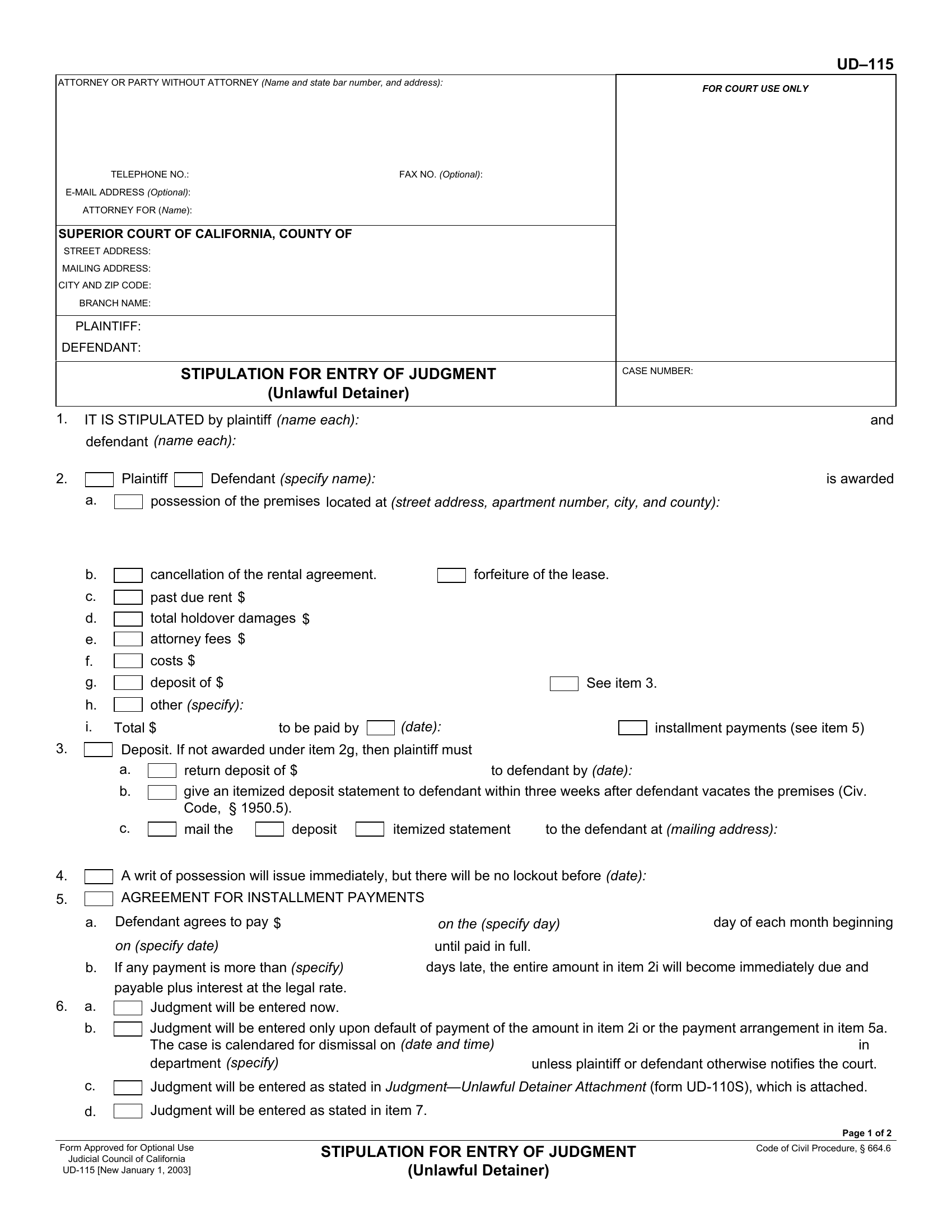
The UD-115 Stipulation for Entry of Judgment form comes into play during the eviction process, specifically when both parties—the landlord and the tenant—agree on the terms of judgment rather than proceeding to a full trial. This form is used after the parties have negotiated terms that resolve the disputed issues, like possession of the property, unpaid rent, or other lease-related items.
- It typically follows a notice to pay rent or quit (such as a 3-Day Notice) when the tenant has failed to comply.
- The landlord may need to file an Unlawful Detainer Complaint (form UD-100) if the tenant does not vacate or pay after receipt of notice.
- The need for this form might be triggered if a tenant wants to avoid a court judgment and lockout, and the parties agree on the terms.
Once both parties agree on the terms, the UD-115 ensures these terms are legally binding. Parties should be aware of their rights, including the option to have legal representation during this process, to mitigate the risk of future defaults or complications.
1. Identify the Parties: Ensure the form clearly lists the names of both the plaintiff and defendant involved in the unlawful detainer case.
2. Complete the Form: Fill out all required sections, including any specific terms agreed upon by both parties, such as payment arrangements or possession of premises.
3. Sign the Stipulation: All parties, including their attorneys (if applicable), must sign the stipulation form to show mutual consent to the outlined terms.
4. File with the Court: Submit the completed and signed form to the clerk at the Superior Court where the eviction case is being processed.
5. Keep Copies: Obtain filed copies for both parties for your records, ensuring compliance with the agreement and future reference.